Monday, November 30, 2009

Man Camp


The Ice Runway

Near the end of each Austral winter in Antarctica, just after the first few sunrises in late August, we have a short season called Winfly or winter fly-in. The population grows from 100-200 to 400-600. At mainbody in early October (when I came), the population jumps to around 1,000. For the rest of the summer, it will fluctuate between 975 and 1,075.


The population at McMurdo with male and female percentages to let you know your odds.

Those fluctuations can be heavily weather dependent because we are the launching point for everyone heading to the South Pole, US deep field camps, and, sometimes, foreign bases. This year, we had terrible weather in October so very few flights went out. South Pole flights were behind 1-2 weeks. Some West Antarctic Ice Shelf (WAIS) people were delayed over a month. When fifty Australians flew in on their way to Casey and were delayed, our population maxed out at 1,107. They had to delay people in Christchurch because we just didn't have enough bed space.


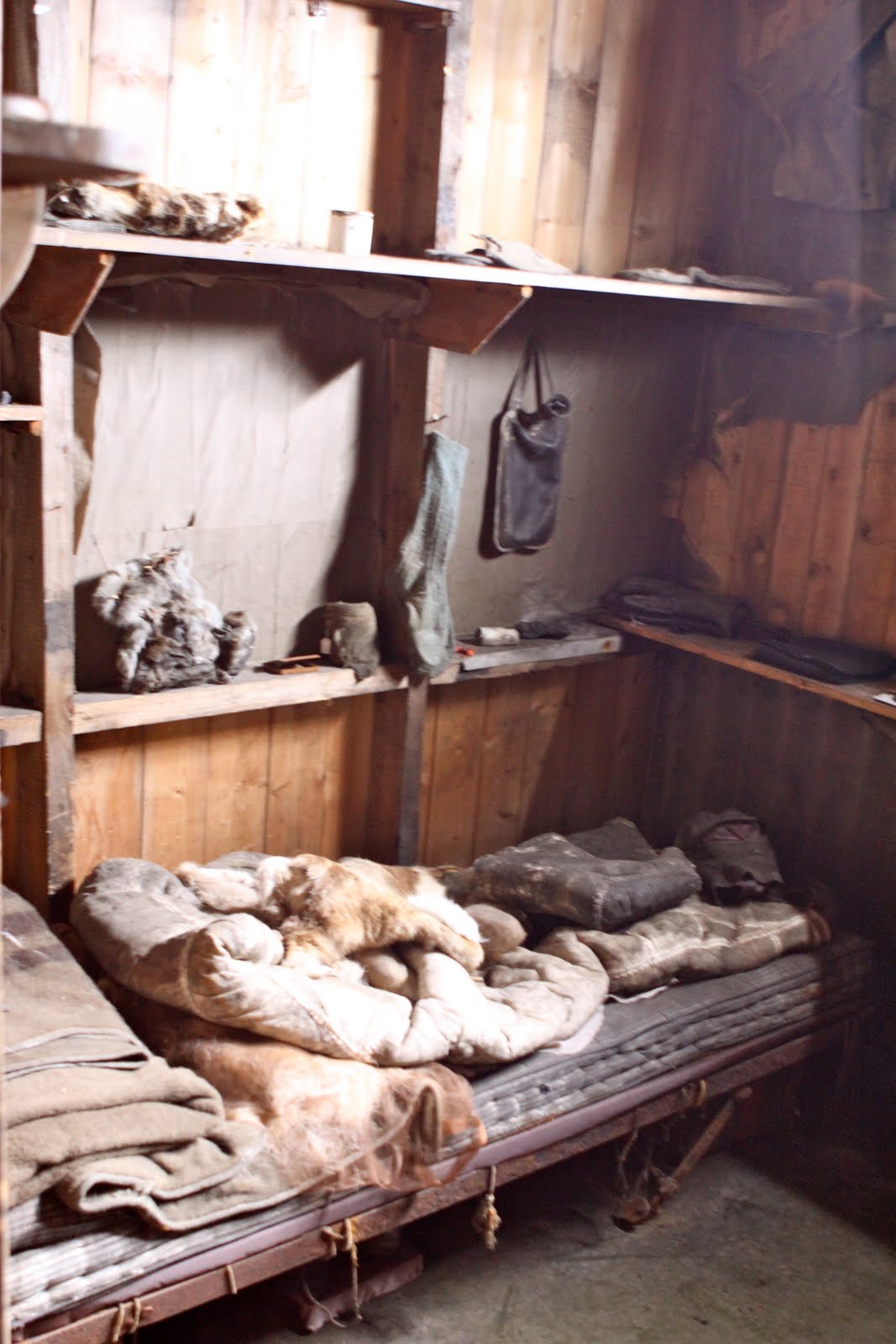
The bunk room, commonly known as Man Camp.

I'm probably wrong, but I feel like the people in my dorm are the first ones to know, outside of housing, when the station maxes out. Our quiet, 44ish person dorm suddenly has 70 people in it, most of them male. Our lounge is overflowing and the men's bathroom is a mad house. The reason is that we have the bunk room, commonly called 'Man Camp.' The bunk room has fourteen bunk beds so that it can sleep 28 overall. Since it is meant as transitory housing, they don't have any dressers and are forced to live out of their bags. No, thank you. Not unless I am camping. Things have mellowed out now and will hopefully stay that way until vessel offload in late January.

Sunday, November 22, 2009

The Ice Edge

The Ice Edge. The ice edge is cracking. The ice edge is coming closer. The ice edge will be here by the end of the month. The ice runway is closing because the ice is so weak. The ice is going to make it all the way to town this year. Cape Evans trips are going to end early because the ice is blowing out so quickly this year. The ice edge might make it town. The ice edge is coming, the ice edge is coming. These are the whispers I am hearing through town on a regular basis.


The ice edge as of November 4, 2009.


The ice edge as of my birthday, November 26, 2009.
Click either picture for a better view. McMurdo is the red dot. The Dry Valleys are the brown areas to the left of the red dots.

What is the big deal about the ice edge coming closer? In March 2000, a very, very large piece of the Ross Ice Shelf broke off to form what would become known as the iceberg B-15. At 295km long and 37km wide, the iceberg encompassed an area twice the size of Delaware or three times the state of Rhode Island. Helicopters would land on it. It even affected weather patterns. This iceberg blocked McMurdo Sound and the Ross Sea for a few years so that the annual ice floe could not break up and blow out to sea. Each year that the ice didn't blow out, it got thicker, heavier, and harder to blow out the following year. While B-15 broke up and blew away a few years ago, it has had lasting effects.

When the ice floe didn't blow out, it meant that the penguins in the colonies nearby had a much longer 'march' from their nests to get food. The extra effort needed to get food for their chicks led to decreased survival rates. It also, and more importantly, meant that the ice edge never reached town. The penguins spend time near the ice edge so that means if the ice edge was close, the penguins would be close where we have a much better chance of seeing them. Lots of old timers talk about the way penguins used to come right to town and bring all their friends with them. I can only hope that will happen this year.


The current sea ice edge about 15 miles from town and why I want it to come closer, PENGUINS!

Some of you might remember that ships come to station every year and wonder how that happens with all the ice in the way? This location was originally selected by Scott because it is, or was, the southern most navigable ice free port in the world. It allowed his expeditions to move goods with minimal effort. The ships that have come down here have always been icebreakers or escorted by them. Larger ice floes just meant more ice breaking. Unfortunately, the ice edge they create is really a small channel and doesn't bring the penguins in the same numbers as if the actual ice edge comes in.

One of the other cool things about the chance to see a lot of open water is that this place seems to come alive. For most of the year, the surface around us doesn't change. Things don't grow. Colors don't change except snow white to volcanic black. When we get water, we get a new color and the constant movement of that water. Some people will just stare at it when they see it. I can't wait!

Edit: This weekend is the final weekend for trips out to Cape Evans because the sea ice is deteriorating. They should be closing the ice runway next week as well.

Friday, November 20, 2009

This video was taken last Saturday night when the storm was still passing through town. It doesn't do the experience justice, but it might do a better job that words and pictures.

footage by Deke

Wednesday, November 18, 2009

Whimsical Weather

The weather has been all over the place this past week. Last Thursday, it was between 14-20F with an average wind of 18mph. The high wind was 38mph. It isn't cold until you add in the wind chill. It changes everything. I have had a number of Polies (people who work at the South Pole) say that they prefer the temperatures at Pole being 40-60 degrees colder than the warmer, but windier days at McMurdo because you just can't win with the wind. While I'm skeptical about that claim, I also know I am not a huge fan of fighting the wind.


Friday afternoon around town (photo by Holly Troy).

Friday and Saturday, the weather got warmer. We even cleared freezing and made it to 35F. Unfortunately, the wind also jumped to an average of 33mph and a high of 79mph. Walking around town was not a pleasant experience. I think travel was restricted to around town only. You couldn't always see the next building. You needed goggles to block dust particles to protect your eyes. You REALLY needed to want to go somewhere to deal with the weather instead of just staying put in your work center.


Snowdrifts on Sunday (photo by Matt Davidson?).

The best part of the storm was that it snowed, which almost never happens here. When we get snow, it usually just blows in from somewhere else. Such a treat. It was a winter wonderland and this place definitely looks its best coated in snow and ice. In case you are wondering how this place doesn't get much snow, but is covered in ice, I'll try to explain. Antarctica is the driest place on Earth. We get an average of 50" of precipitation a year. South Pole only gets 3". The trick is that what we get, we keep, especially inland.


A Keen trap or a small river.

At the beginning of the week, the weather finally started to clear. The temperature dropped, the wind mellowed to a mere 9-28mph, and the sun came out. The sun coming out was a blessing and a curse. I love my sunshine, but all that sunshine on all that new snow created a giant wetland. You never knew when the ice or snow might give way to a puddle for you to fall into. They would plow the snow drifts that would turn a small pond into a small river racing downhill, usually towards your favorite shortcut. It was so bad, I had to ditch my Keens for three days in exchange for my Keen boots. Today, enough of the snow has finally melted or been moved elsewhere that my Keens are a pretty safe bet again.


Clearing weather over the chalet and Ob Hill

Today is a nice day. It is 15F ambient and 3F with the windchill. Town is pretty much cleaned up. They are moving the last of the major snow off the ice roads and runway which is great for vehicles, but kind of a bummer for skiing. It is great for them because the snow forms an insulating layer which warms the sea ice. Our 625,000lb fully loaded C-17 can only land on a certain quality of ice. Apparently, the first plane in this week had to fly around an extra hour to use up fuel and lighten its load so that it could land safely on the sea ice. As the sea ice continues to weaken, they'll monitor the 'give' of the ice when a plane lands. When it gets to a certain point, they'll move the runway 13 miles out of town to the ice shelf which has less problems, but adds to vehicle costs. Okay, that is the week in weather. Time to get back to my sunshine.


The biggest snow blower EVER clears the ice runway road.

Anecdote of the day: One of the grantees was out in the field yesterday and it was a pretty trying day. Today, he went home in the afternoon to take a nap. He snuck into this room so that he wouldn't wake his night shift working roommate. The roommate wasn't used to him sleeping at the same time as him and had to ask if it was 4am or 4pm because it is always light out now.

Edit: I have a wet sock. It isn't safe yet for the Keens in areas that get a ton of sun.

Monday, November 16, 2009

Leopard Seal Whiskey Boat

Lots of Antarctic stuff in the news this week:

I've never seen a leopard seal here. I don't know anyone except grantees who have seen them. We usually just get Weddell seals closer to town. Anyway, this video is incredible.


Earlier this year, they found crates below Shackleton's Hut at Cape Royds. Apparently, they contain 100 year old whiskey that more than a few people would love to get their hands on whether they are history buffs, whiskey connoisseurs, or just someone from McMurdo who can't buy hard liquor by the bottle on base and can't wait until the bar opens. All I really know is that they plan on digging (possibly drilling) to get to them.


Shackelton's Hut at Cape Royds.

Apparently, another tourist ship is stuck in the ice flow near the peninsula on the other side of the continent. They aren't in any danger and are apparently enjoying themselves. They just need to wait for the wind to unblock the back or possibly for a larger ice breaker to come charging to the rescue.


The Captain Khlebnikov

Sunday, November 15, 2009

Ice Caves and Cape Evans trip


Michael and Meg are auditioning for Easy Rider or . . . . letting the wind hold them up.

Two weekends ago, I went on a recreational trip to Cape Evans. Cape Evans is located fifteen miles north of McMurdo Station, but still on Ross Island. On the way there, we also stopped at an ice cave.


Our sled full of survival gear and the ice cave in the distance.


Our ride to Cape Evans, a delta. I love the nothingness beyond the delta.

During my first year on the ice, I visited Cape Evans four times: twice on recreational trips, once to take out the flagged route, and once to put the flagged route back in after winter. At this point, I'm not as excited to see that piece of history. I was really excited for the chance to see emperor penguins and the ice cave. After being closed a few years, the cave reopened just after I left the ice my first time. Emperor penguins have eluded me every time I've been out, however, I had heard of sightings on the road out so I was hopeful.


The ice cave.


In the back of the cave, the light comes through the ice in the ceiling.


Me.

The ice caves are a great addition to the Cape Evans trip. I was told the the caves reopened because the sea ice levels have finally dropped back down. They were high for years because the giant iceberg, B-15, blocked the bay up almost a decade(?) ago and didn't let the ice out each year. The build up is finally clearing out.


Scott's Hut at Cape Evans and Barne Glacier.

Cape Evans is home to Scott's Hut where Scott launched his fatal expedition to the South Pole. Scott was beaten to the pole by Amundsen, but didn't know it until he reached the pole. They didn't make it back.


Scott's sleeping quarters.


My first penguin this time is the same as my first penguin last time.


A little Pittsburgh love . . .

Shackelton's Endurance expedition also used the hut. Shackelton intended to complete a transcontinental crossing via the Pole in 1914. He never made it. He was trapped in the sea ice before he ever touched land and his journey home has been well captured in Shackelton's iMax or The Endurance. The part of that story that isn't well known is that the men waiting for Shackelton on the other side of the continent were left waiting three years because their own ship had blown away in a storm. The anchor is still there today.


An iceberg on the way out to Cape Evans.

Thursday, November 12, 2009

Time to Leave the Dry Valleys

After six days and five wonderful nights, my time in the Dry Valleys did come to a close. My final day there was beautiful. Blue skies. Shining sun. Low wind. It was everything I could have asked for. The Comms guys came in and we got the Internet working at camp again. Something was wrong with the repeater on Voslips.

I didn't think I'd experience too much else on the flight home. I felt like I'd been overloaded for days and didn't know if I could handle too much. However, it turned out that my trip of a life time wasn't quite done yet. After leaving Lake Hoare, we didn't fly straight to McMurdo. We went to 1882 (one of the peaks in the Dry Valleys) to check on the repeater equipment. Then, we went to another mountain top, Voslips, to pick up the Comms techs who were fixing the Internet for Lake Hoare. Finally, we headed home to McMurdo Station. Here is a time lapse of the entire flight.


My helicopter ride from just after take off at Lake Hoare, to 1882, to Voslips, to McMurdo

0:00 The Northern Slope above the Seuss Glacier
0:40 Lake Bonnie
0:50 Loop around back toward Frixel and Lake Hoare
1:10 Lake Bonnie on the loop back around again to gain altitude
1:20 Lake Frixel
1:42 1882 repeater and panorama
2:38 Mt. Voslips
5:15 Mt. Erebus, southern most active volcano in the world
5:35 McMurdo Station


Happy Days

My time out in the field was amazing. My final day at camp with six people instead of just three was much more representative of the field camp experience. To have only three people there was peaceful bliss. I loved it and feel so fortunate to have gotten to go at all, let alone to be delayed there for so many days. I just hope that this series of blogs has conveyed even a small part of what I felt and went through.

Lake Hoare camp


Lake Hoare field camp.

The day after I went to Lake Frixel and saw the sundogs, I was delayed yet again! I could not believe my luck. SIX DAYS in the dry valleys. Unfortunately, I was so wiped I didn't get out to explore. I hung around camp which left me with more time to spend with my hosts and enjoy a slower pace of life. My hosts, Rae and Becky, were such a treat to spend time with. I don't think I would have enjoyed myself nearly as much if they weren't there.

Daily life in the camp moved at a precious pace. It was the anti-thesis of life at McMurdo where everything is go, go, go. Each morning, you woke up and were responsible for your own breakfast. Before the work day started, we would usually chat, drink hot drinks, and do a group crossword puzzle. After breakfast, Rae and Becky both had a bunch of work to do to get the camp ready for the season. They would have me help them where possible. I think I helped harvest glacier berries for fresh water the most because it was a simple task they could set me to and then do their own thing. I also shoveled snow, resculpted snow steps, changed propane tanks, carried boxes, put up tents, started a really, really cold ATV, tied cables down, and cleaned.

After a few hours labor, we'd come in for lunch and eat leftovers from the night before. Rae might whip up some cookies for an afternoon snack and then we'd get back to it. They were pretty busy with camp opening activities. I'm not sure what they do once camp is fully operational, but it would probably involve assisting the grantees somehow in addition . Life moved at a wonderful place for the few days I was there. Usually, Life moves a bit faster there usually because they have more people there to support.

I'm missing lots of odds and ends that I should be talking about. Rae sent me home with one of the best batches of macadamia nut cookies that I've ever had. She made a ridiculous peanut sauce to over veggies and rice. I had white chocolate. I must be hungry since I keep mentioning food or it was just that good. We all take turns cleaning up. We did a ton of crosswords. I can't remember the last time I enjoyed doing so many crosswords.


Glacier berry box by the door of the main hut.


Glacier Berries and the calved spot we harvest them from in the distance.


The ATV to haul things around Lake Hoare. We used the pull cord over a hundred times to start it in the cold. Ugh.


Mt. Rae


Canada Glacier calve site and place to harvest berries for weekly showers.


Rae, the camp manager for twelve years running, in the dining/kitchen area of the main hut.


Becky!


My sleeping quarters for my one night in the Scott tent we set up. I was in the main hut the other nights since no one else was around.


Solar energy.


One of the research labs at the camp.


This dead penguin was just outside the Scott tent I slept in.


The rocket toilet that burns your human waste. Kind of smelly.


The urinal for men since the rocket toilet doesn't do too well with too much liquid.


A helicopter coming into to land at Lake Hoare on my final day. Most people sleep in tents while at Lake Hoare.

Sundogs and Lake Frixel


A morning sundog over Lake Hoare camp.

After spending one more brilliant day in the Dry Valleys, I woke up feeling like Charlie when he found the last golden ticket. I was elated at having been able to spend an extra couple days in the valleys. After a quick morning walk, I settled in for breakfast. Rae called in on the radio to get that day's helicopter schedule so I'd know when to be packed up. I was slated to head out in the afternoon. However, they also said that all flights were on a two hour delay due to more bad weather. As the day progressed, two hours became four, four became six, and soon all the flights were canceled for the day again! My two day trip had become a five day escapade!!


A second sundog over Lake Hoare camp.

Over the course of the morning, we saw two sundogs. Sundogs are an atmospheric phenomenon that create a halo around the sun. They can occur at any time of year, any where in the world, but I've never seen them until I was in Antarctica. In order to form, sundogs need ice crystals or fine snow particles in the air to refract the sun's light. That refraction can give the halo some coloring, just like a prism. It is such a neat natural phenomenon to see.


Canada Glacier

After another slow day of camp chores, I was set loose for another trot around the valley. This time, I set off towards Lake Frixel, which is the closest lake to McMurdo Sound. Unfortunately, I just didn't have the energy. I had been going too hard for too many days. When I reached the lake, I decided to just turn back instead of heading for my final destination. I didn't need to go any farther. The extra day and being there was scenery enough.


Lake Frixel

Friday, November 06, 2009

Bonus day hike on Andrew's Ridge


Lake Frixel and the mouth of the Taylor Valley

While I was out on my hikes over our one day weekend, we lost two of our connections, Internet and phone, to the outside world. We weren't worried because we still had our radio and Iridium phone and the Comms guys could fix them on Monday. In order to use less resources, the Comms shop and my boss (Thank you, Karen and Bill!) decided they would keep me at the field camp for a few extra hours to troubleshoot the problem from Lake Hoare while the Comms guys went to Voslips, the location of the mountain top repeater, to troubleshoot the problem from there. Instead of having one of the first flights out Monday morning, I'd be waiting until late afternoon.


A ventifact.


Use your imagination and see a hand.
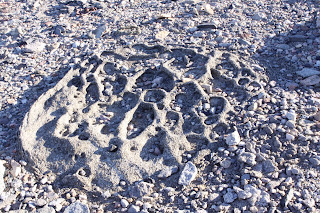

Another ventifact.

Only an hour or two after that decision was made, the weather deteriorated at McMurdo and all helicopter flights were canceled for the day. That left me stranded in the Dry Valleys for one more night! My two day trip, turned three day trip, had become a four day trip! Fortunately for me, it was a blue bird day on my side of McMurdo Sound at Lake Hoare. I did camp chores during the day and was set loose to hike Andrew's Ridge in the late afternoon.


Andrew's Ridge.


Glacier demolished ground?

Hiking Andrew's Ridge was amazing. After crossing Lake Hoare, I walked straight up to the ridge line. From there, I just headed west towards Lake Bonnie, the polar plateau, and the area above the defile that I had hiked to earlier. Along the way, the terrain changed drastically. Near the top of the ridge, there was almost no snow and most of the rocks look like they had been smashed to smithereens. Because the area was so flat, I assumed a glacier had ground up the large rocks and then receded. However, it might have been sand and wind erosion over thousands of years. I don't know. The few large rocks left behind were all ventifacts that had been eroded down by the sand. It was incredible to witness.


A ventifact.


More ventifact.

About halfway through my jaunt along Andrew's Ridge, I noticed myself looking for terrestrial wildlife. There was none. There isn't any terrestrial wildlife in Antarctica, only avian and aquatic wildlife. I think I almost forgot I was in Antarctica because it was so warm and I wasn't waking on any ice. It was similar scenery to a summer alpine hike in Colorado. When I finally remembered I was in Antarctica, it really struck me just how out of place the Dry Valleys are. There should be ice everywhere, but there isn't. Parts of them are almost barren of snow.


Another ventifact.


More ventifact.

Along the way, my black fleece jacket fell off my backpack. I was really worried because you aren't supposed to leave ANYTHING behind in the Dry Valleys. I was peeing in a bottle, swallowing my saliva, and even wiping my nose on my sleeve instead of using a farmer's blow or snot rocket. If I went back, I wasn't sure I'd find it because it blended into the terrain and there wasn't an exact trail to follow. I'd been trying to walk rock to rock so I wouldn't leave any footprints behind. Apparently, they can last for years. There are tire tracks from the 1960s that haven't eroded away yet in another part of the valleys. I went back about a half mile, got lucky, and spotted it. When I got back to camp, Rae told me about a shirt of hers than had been lost and recovered four years later! I don't think she is still wearing it.


Lake Bonnie and the spot where I dropped down to Mummy Lake.


Yet another ventifact.

While I was walking on this hike there wasn't even a strong breeze to generate any noise other than the swooshing of my own jacket. If I stopped, there was nothing to hear. Nothing, but silence. So much nothing, that I pulled my hood down to better hear the sound of silence.


Seuss Glacier


Not so mummified seal on the north shore of Lake Hoare (maybe Chad).